
The six “P’s” of Planning

At the beginning of the year we start to plan what we will do at our GFS meetings.

Planning begins with “PL”.

P is for Persons, the participants. Important questions to ask at the beginning of the planning process are:

  • For whom are we planning?
  • What do we know about these persons?
  • What are their needs and interests?
  • Why will they be participating?
  • How many will there be?

L is for Listening. We must listen to the participants and also invite them to participate in the planning. Also we must listen to the call of the Spirit of God. Indeed listening for the Spirit of God in prayer demands involvement with people. God speaks in the midst of such involvement. We must never let our plans dominate our concern for persons or our need to listen for the call of God to follow him in ever new and adventurous ways. That’s faith!

Planning is a process. It is not something a leader does only before going into action. It begins before action, continues during action and goes on after action. So it continues ….

1. PURPOSE: What is our Aim? “We preach …. We warn …. We teach …. “ Colossians 1:28

2. POSSIBILITIES: What is known or available? Paul says everyone has different gifts to be used for a range of possibilities for God’s service. 1 Corinthians 12

3. PRIORITIES: What comes first?“We are free to do anything, but does everything help the building of community?” Corinthians 10:23. This indicates that there is a need to prioritise.

4. PROGRAMME: Who will do what, when and where?In the early church they chose some men to go to Antioch with a letter. Acts 15:22-23. This was their programme.

5. PRACTICE/PERFORMANCE: Action!1 James: 25 “…. be not a hearer who forgets but a doer that acts, he will be blessed in his doing.”

6. POST-PERFORMANCE: What have we learnt?”Put all things to the test: Keep what is good…” 1 Thessalonians 5:21 We need to learn from our mistakes and our successes for the next plan.

There is one more “P” required to include for our Planning Process. That P is for Patience. Patience means spending time in the whole planning process. It takes time and patience to plan well.

Straw and Paper Game

Divide the group into 2 teams. Give each player a drinking straw. Place one inch squares of various colored construction paper onto 2 chairs. Ensure there are an equal number of pieces on each chair. Place 2 more chairs at the other end of the room. The teams line up and each player, one at a time, picks up a piece of paper with her straw without using hands and carries it to the other end of the room where it is placed on the chair there. When that player returns, she taps the next player in the line. Repeat this until everyone has carried a piece of paper from one end of the room to the other or until all pieces of paper have been transferred, using a straw. If the paper drops, it must be picked up on the end of the straw without using hands. The team that finishes first wins.

Games

“Also that everyone should eat and drink and take pleasure in all his toil—this is God’s gift to man.” Ecclesiastes 3:13 ESV

“Great Games for Girls“ is a list of over 100 games that can be used for a group to play.

Other ideas of Games that can be played are below:

Ball Games

Balloon Games

Christmas Games

Team Games


The start of GFS

The beginning of GFS goes back to the 1870’s when single girls began leaving their homes and moving to the cities of England to be employed in the textile mills. We, who take for granted the idea of women working at all sorts of jobs, can scarcely realise the stir caused by these pioneer girls.

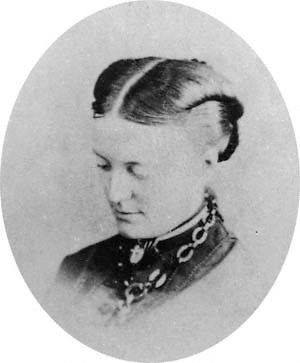
Although they had found independence, most of them had a great need of making friendships both with other girls and with God. This need was noticed by a young woman of 22 years of age named Mary Elizabeth Townsend (pictured). She convened a meeting known as “The Historic Meeting of Five” at Lambeth Palace in England. It was at this meeting that plans were formed for a Society of girls and women. And so GFS was established in 1875 to meet those needs and from this came the name – The Girls’ Friendly Society.

Down through the years GFS has continued to look at girls and women and ask “What is their need?” In our changing world, the basic need has not changed, for it is the basic need of every person to find herself and her salvation in Jesus Christ our Lord. GFS helps girls and women understand what it is to be a Christian within their own particular life situation and provide opportunities to discover their own relationship with God, family, community and the world.

Thinking of Christmas?

Gifts of thoughtfulness and kindness
Are more precious far than gold,
And like gifts of love and friendship
Are never, never sold!
And folks who give such gifts show forth
God’s goodness from above
And reflect the Christmas spirit
Of joy and peace and love!

By Jon Gilbert